
Adding a concrete patio to your backyard is one of the most effective ways to increase your home’s livable square footage and boost property value in Hunt County. However, because a patio is a major construction project, homeowners naturally want to know how long their backyard will be a “construction zone.”
In Greenville, TX, a professional concrete patio installation typically takes 3 to 5 days of active labor. However, the total timeline from the first shovel in the ground to the moment you can host a BBQ is approximately 10 to 14 days. This guide provides a detailed, hour-by-hour look at the process, the variables that impact the schedule, and why certain steps cannot be rushed in the North Texas climate.
The Pre-Construction Phase: Permitting and Planning
Before the first truck arrives at your home, several days (or weeks) of preparation must occur. This phase doesn’t involve heavy machinery, but it is critical for a legal and lasting install.
1. Site Evaluation and Design
First, a representative from Greenville Pro Concrete Contractors will visit your property. We assess the “grade” (slope) of your yard and the type of soil. Because Greenville sits on expansive clay, we must plan for a thicker sub-base than contractors in other states might use.
2. The Permitting Process
In many parts of Greenville and the surrounding unincorporated Hunt County areas, a permit is required for any permanent Concrete Slab.
- Timeline: 5-0 business days.
- Why it matters: The city checks to ensure your patio won’t interfere with utility easements or cause drainage issues for your neighbors.
Day 1: Excavation and Site Preparation
The first day of physical labor is the most transformative. Our crew arrives with skid steers or mini-excavators to prepare the “footprint” of your patio.
- Layout and Staking: we use string lines and laser levels to mark exactly where the concrete will go.
- Sod Removal: We remove 4 to 8 inches of grass and topsoil.
- Sub-Base Installation: This is where many DIY projects fail. We bring in 2 to 4 inches of crushed stone or recycled concrete. This layer acts as a “buffer” between the shifting Greenville clay and your rigid patio.
- Compaction: We use a plate compactor to ensure the base is rock-solid. If the base isn’t compacted, you will eventually need Concrete Repair due to sinking.
Day 2: Forming and Structural Reinforcement
Once the ground is prepped, we build the “mold” for your patio.
Setting the Forms
We use flexible or straight wood forms to create the shape of your patio. If you have requested a custom curved design for your Concrete Driveways & Patios, this step takes longer as we must carefully bend the formwork to match your vision.
Reinforcement Installation
We lay down a grid of #3 rebar (steel rods) or heavy-duty wire mesh. In the North Texas heat, concrete wants to expand and contract. Rebar gives the patio “tensile strength,” meaning it holds the slab together even when the ground moves. Without rebar, a patio in Greenville will likely crack within two years.
Day 3: The Big Pour and Finishing
This is the most critical day of the project. The timing must be perfect, especially if we are Pouring Concrete in Hot Texas Summers.
- The Delivery: A concrete mixer truck arrives. We use a high-strength 3,500 or 4,000 PSI mix design tailored for local weather.
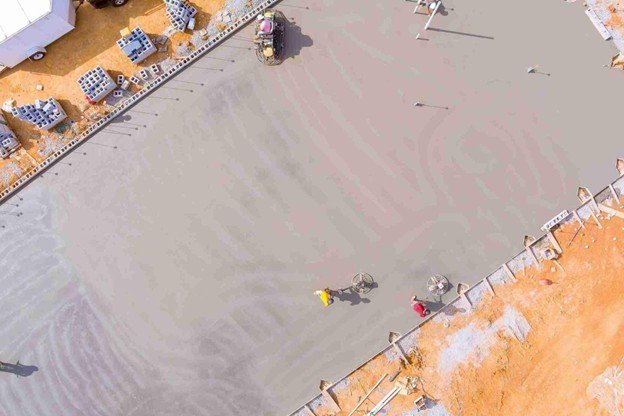
- Screeding: Our crew uses a straight edge to “saw” back and forth across the wet concrete, ensuring it is perfectly level.
- Floating: We use “bull floats” to push down the large rocks (aggregate) and bring the smooth “cream” to the surface.
- The Final Texture: * Broom Finish: A non-slip texture created by pulling a specialized broom across the surface.
- Stamped Finish: If you choose Stamped Concrete, we apply color hardeners and then press large rubber mats into the wet surface to create stone or wood patterns.
Day 4: Curing and Form Removal
After the concrete is poured, it needs 12 to 24 hours to reach the “initial set.” On Day 4, we return to handle the finishing touches.
- Form Stripping: We carefully remove the wooden boards from the perimeter.
- Control Joints: We use a diamond-blade saw to cut straight lines into the patio. These joints are “planned cracks.” When the concrete eventually settles, it will crack inside these neat lines rather than across the middle of your patio.
- Initial Wash: If we used a stamped finish, we washed away the “release agent” (the powder used to keep the stamps from sticking).
Day 5: Final Cleanup and Sealing
The last day of work ensures your patio is protected from the elements.
- Sealing: We apply a high-quality acrylic sealer. This is especially important for stamped concrete to make the colors “pop” and to protect the surface from UV damage and oil stains.
- Backfilling: We fill the gap where the forms were with soil so your lawn meets the edge of the new patio seamlessly.
The “Waiting Period”: When Can You Use It?
Just because we have left the job site doesn’t mean the patio is ready for a party. Concrete takes 28 days to reach its full design strength, but you can use it sooner if you follow these rules:
| Time Elapsed | Allowed Activity |
| 24 Hours | Walking with soft-soled shoes (keep pets off!). |
| 48 Hours | Moving lightweight patio chairs (no dragging!). |
| 7 Days | Hosting a small gathering or moving a standard grill. |
| 14 Days | Moving heavy planters or permanent furniture. |
| 28 Days | Installing a hot tub or heavy outdoor kitchen equipment. |
Why Local Expertise Matters for Your Timeline
When comparing Concrete Driveway Costs in Greenville or patio estimates, many homeowners are tempted by the “fastest” quote. However, rushing concrete is dangerous.
The “Flash Set” Risk
In Greenville, the wind and sun can cause concrete to dry on top while it is still wet underneath. A professional team knows how to use “retarders” (chemicals that slow down the drying) to ensure the slab cures evenly.
Concrete vs. Asphalt Speed
If you are weighing your options, keep in mind that while asphalt is faster to install, it often requires more frequent maintenance and doesn’t offer the same longevity. Read our full comparison here: Concrete Driveway vs Asphalt: What’s Better for Greenville Homes?
Is Stamped Concrete Worth the Extra Time?
Homeowners often ask if a decorative finish adds days to the timeline. Generally, What Is Stamped Concrete involves one extra day for the washing and sealing process. While it takes slightly longer, the aesthetic impact is well worth the wait.
Conclusion: Start Your Countdown to a New Backyard
A concrete patio is a 30-to-50-year investment. While the 5-day installation process might seem like a disruption, the result is a durable, beautiful space for your family to enjoy.
At Greenville Pro Concrete Contractors, we pride ourselves on hitting our deadlines and keeping our job sites clean.