
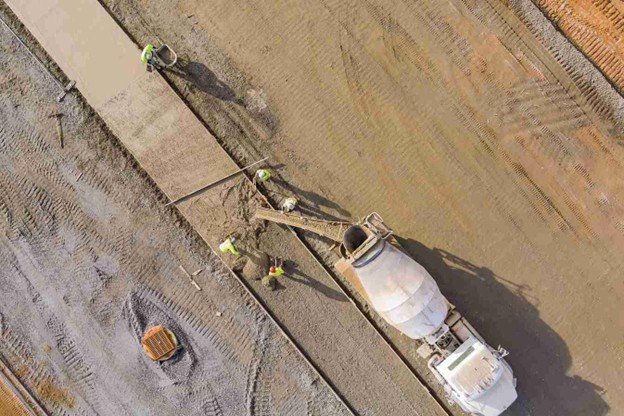
If you live in Greenville, TX, you know that “summer” isn’t just a season, it’s a survival test for both people and building materials. As the mercury climbs toward 100°F, homeowners often ask: Is it safe to pour a new driveway or patio right now?
The short answer is yes, but it requires a level of expertise and preparation that many standard contractors overlook. Pouring concrete in the Texas heat is a race against the clock. Without the right strategy, your investment could end up with “spiderweb” cracks, a dusty surface, or structural weakness.
At Greenville Pro Concrete Contractors, we have mastered the art of high-heat pours. This guide explains the challenges of the North Texas climate and how we ensure yourConcrete Slab stays strong for decades.
The Science of Concrete and Heat
Concrete doesn’t “dry” it cures through a chemical reaction called hydration. When water and cement mix, they create crystals that bind the sand and gravel together.
In a typical Greenville summer, two things happen that threaten this process:
- Rapid Evaporation: The sun and wind pull water out of the top layer of concrete before the chemical reaction is finished.
- Flash Setting: High temperatures speed up the chemical reaction, causing the concrete to harden before the crew has time to properly level and finish it.
If the top dries faster than the bottom, the surface will peel, flake, or develop “plastic shrinkage cracks.” To avoid this, our team uses specific techniques detailed on our Concrete Repair page to prevent future failures.
Our “Heat Wave” Protocol for Greenville Pours
When the forecast shows triple digits, Greenville Pro Concrete Contractors implements a strict protocol to protect your project.
1. The “Early Bird” Start
In July and August, we often start our pours at 4:00 AM or 5:00 AM. By pouring in the predawn hours, we take advantage of cooler air and ground temperatures, giving us a longer “window” to achieve a perfect finish before the sun hits the slab.
2. Subgrade Saturation
Before we pour, we thoroughly soak the gravel sub-base and the wooden forms with water. If the ground is bone-dry, it will suck the moisture out of the bottom of the wet concrete, leading to uneven curing and a weak foundation.
3. Specialized Mix Designs
We work closely with local Greenville concrete plants to adjust the “recipe” for heat:
- Retarders: Chemical additives that slow down the setting time, giving our finishers more time to work.
- Chilled Water or Ice: In extreme cases, the plant uses chilled water to keep the internal temperature of the concrete low during transport.
Stamped Concrete Challenges in the Heat
If you are opting for Stamped Concrete, heat is even more of a factor. Because stamping requires the concrete to be at a very specific “plastic” consistency, a hot day can ruin the window of opportunity to press the patterns.
If you’re wondering if the aesthetic is worth the summer hassle, read our breakdown: What Is Stamped Concrete and Is It Worth It?
Curing: The Most Important 24 Hours
Once the concrete is poured and finished, our job isn’t over. In Texas, the “curing” phase is where the battle is won or lost.
- Curing Compounds: We apply a liquid membrane that acts like “Saran Wrap” for your concrete, locking the moisture inside so it can cure slowly.
- Water Curing: For certain high-performance Concrete Driveways & Patios, we may recommend “wet curing,” where the homeowner lightly mists the slab with a garden hose several times a day to keep the temperature down.
Concrete vs. Asphalt in the Sun
It’s worth noting that while concrete is difficult to pour in the heat, it performs much better than asphalt once it is set. Asphalt absorbs heat and softens, while concrete reflects heat and stays rigid. See a full comparison here: Concrete Driveway vs Asphalt: What’s Better for Greenville Homes?
Planning Your Summer Project Timeline
Because of the heat, summer projects in Greenville can take slightly longer to coordinate. We have to wait for the perfect weather window. For an idea of the standard timeline (assuming the weather cooperates), see: How Long Does It Take to Install a Concrete Patio?
Conclusion: Don’t Fear the Heat Hire the Pros
You don’t have to wait until October to get the driveway or patio you’ve been dreaming of. You just need a contractor who understands North Texas thermodynamics.
At Greenville Pro Concrete Contractors, we’ve poured thousands of yards of concrete in the peak of summer. We know how to beat the clock and deliver a slab that is as strong as it is beautiful.