
If you are a homeowner in Greenville, TX, deciding between a concrete and an asphalt driveway is one of the most important exterior maintenance decisions you’ll make. While both provide a solid surface for your vehicles, the extreme North Texas climate, characterized by blistering summer heat and shifting clay soils, interacts very differently with these two materials.
At Greenville Pro Concrete Contractors, we believe in providing local homeowners with the facts they need to make a 30-year investment. This guide breaks down the pros and cons of concrete versus asphalt specifically for the Hunt County environment.
The “Texas Heat” Factor: How Temperature Affects Your Driveway
In Greenville, summer temperatures frequently soar above 100°F. This is where the primary difference between concrete and asphalt becomes physically apparent.
Asphalt and the “Softening” Effect
Asphalt is a petroleum-based product. It is naturally flexible, which is a benefit in colder climates, but a major liability in Texas. Under the intense sun, asphalt absorbs heat, reaching temperatures up to 150°F. At this heat, asphalt softens. If you park a heavy truck or an RV on a hot asphalt driveway in August, you may see “rutting” or indentations where the tires sit.
Concrete’s Thermal Mass
Concrete is a rigid composite. It reflects more sunlight than dark asphalt and remains structurally solid regardless of the temperature. A Concrete Slab installed by professionals will not soften or deform, even during a record-breaking Texas heatwave. To understand how we manage these pours during the hottest months, see our guide: Can You Pour Concrete in Hot Texas Summers?
Soil Movement: Dealing with North Texas Clay
Greenville is famous (or infamous) for its “expansive clay” soil. This soil acts like a sponge, expanding significantly when it rains and shrinking during droughts.
- Asphalt’s Flexibility: Because asphalt is flexible, it can “ride” the waves of shifting soil more easily than concrete without snapping. However, this flexibility leads to alligator cracking and unraveling over time.
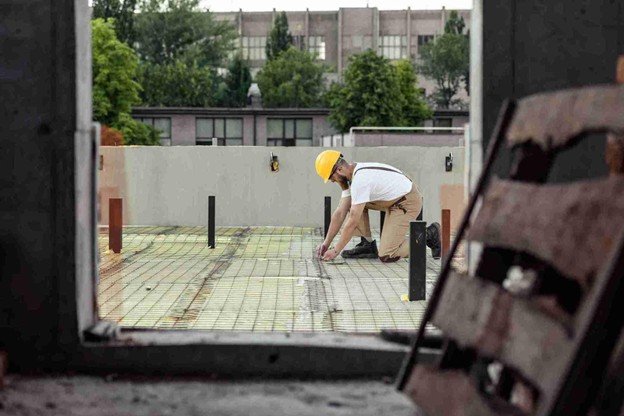
- Concrete’s Rigidity: Concrete is prone to cracking if the soil moves beneath it. However, Greenville Pro Concrete Contractors mitigates this by using heavy-duty rebar reinforcement and deep sub-base preparation. When properly engineered, a concrete driveway acts as a monolithic bridge over the shifting soil.
If your current driveway is already showing signs of soil-related failure, you may not need a full replacement. Explore our Concrete Repair services to see if we can stabilize your existing surface.
Aesthetic Versatility and Curb Appeal
When it comes to the look of your home, concrete offers a level of customization that asphalt simply cannot match.
- Asphalt: You are limited to one color: black (which eventually fades to gray).
- Standard Concrete: Provides a clean, modern off-white or light gray finish that brightens the front of the home.
- Decorative Concrete: With Stamped Concrete, we can make your driveway look like hand-laid stone, brick, or slate.
If you’re curious about the value add of these decorative options, read: What Is Stamped Concrete and Is It Worth It?
Maintenance and Longevity: The Long-Term ROI
The biggest factor for most Greenville homeowners is the “Total Cost of Ownership.”
| Feature | Asphalt Driveway | Concrete Driveway |
| Lifespan | 12 – 20 Years | 30 – 50 Years |
| Maintenance | Requires seal-coating every 2–3 years | Requires sealing every 5–10 years |
| Repair Needs | Prone to potholes and edge unraveling | Occasional crack sealing |
| Property Value | Neutral / Functional | High / Added Curb Appeal |
While the initial Concrete Driveway Cost in Greenville is higher than asphalt, the fact that concrete lasts twice as long makes it the more economical choice over the life of your home.
Installation Timelines
If you are in a rush to use your driveway, asphalt has a slight edge. Asphalt can usually be driven on within 24 to 48 hours. Concrete requires a curing period to reach its design strength.
Typically, we ask homeowners to wait 7 days before driving a standard vehicle on new concrete. For a deeper look at project timelines, see: How Long Does It Take to Install a Concrete Patio?
The Verdict: Which Is Better for Greenville?
For the majority of residential homes in Greenville, Concrete is the superior choice.
The combination of the Texas heat (which melts asphalt) and the desire for high property resale value makes concrete the standard for North Texas neighborhoods. Asphalt is often better suited for very long, rural country lanes where the cost of concrete would be prohibitive. But for a standard suburban lot, the durability of Concrete Driveways & Patios is unbeatable.
Start Your Project with Greenville’s Pros
Choosing the right material is only half the battle; you also need the right team to install it. At Greenville Pro Concrete Contractors, we understand the local climate and soil better than anyone.